Mine site security: Step-by-step guide for securing mining operations


Trusted by 100,000+ organizations across the globe


Mining, particularly underground operations, is regarded as one of the most dangerous occupations in the world, with some of the highest rates of workplace harm among heavy industries.
However, external risks and threats have also become more apparent to mining operations in recent years. The 331 site disruptions in copper, nickel, cobalt and lithium mining indicate increasing social resistance as operations expand globally, placing further strain on security administrators.
Threats and risks to the mining industry have evolved to the point that site security must be a priority for organizational leaders. This guide will explain why and consider how to develop an effective action plan, including safety and physical security measures to protect employees and maintain productivity.
Why is mine site security important?
Mine site security is vital for protecting people and property across the usually vast operational areas. Administrators will implement comprehensive security systems to address multiple factors necessary not only to achieve productivity targets but also to mitigate risks and threats that could cause costly damage and disruptions to the organization.
The main factors that underline the importance of mine site security systems are:
- Operational efficiency: Mining facilities are often complex networks of structures and premises that contain various heavy equipment and many personnel on site. An advanced security system can help maintain operational efficiency by providing more comprehensive oversight across all locations.
- Protecting assets: Mines often host precious metals and other valuable resources that can be targets of thieves or vandals. Security systems are crucial for observing and protecting assets and equipment.
- Personnel safety: As mining is a heavy industry, numerous health and safety hazards on the premises pose risks of accidents or injuries to personnel. On-site security is vital for mitigating potential harm to mining workers and capturing evidence of incidents.
- Deter external threats: While many mining organizations prioritize sustainable operations, external environmental protests can still disrupt operations. Implementing perimeter security measures is vital to ensure the safety of workers across the premises and prevent unauthorized access.
- Emergency response: Given the heightened safety risks in the industry, a swift emergency response is necessary to ensure appropriate action in the event of an incident. Most site security systems will have a plan in place to help respond to various emergency scenarios.
- Regulatory compliance: Many jurisdictions worldwide will have regulatory security frameworks for mining operations. Security systems can help site administrators ensure compliance with applicable local laws and regulations.

- Trusted globally for over 65 years
- Explosion-proof and heavy-duty options
- 24/7 thermal and low-light visibility
- AI-powered threat detection
Common challenges for mine security
Mine site security is increasingly important given the changing landscape and the growing challenges the industry faces. Where operations continue to grow, risks and threats to people’s safety and property rise in parallel.
Scalable, adaptable solutions have now become crucial to security for mining operations. Below are some of the challenges that prompt shifts in safety strategies.
- Combustible materials: Many resources and materials found at mine sites, such as coal dust and diesel fuel, are highly flammable and can ignite easily. This poses risks to industrial worker safety. While supervisors make efforts to ensure the correct handling and transport of such materials, maintaining oversight across a vast worksite can be challenging.
- Unauthorized access: Mine sites have many access points that vary in size and purpose. They are often very active during working hours, posing an elevated risk of unauthorized access to the premises.
- Protests: Environmental protests against mining sites have increased significantly in recent years and many have become particularly disruptive. Many protests can form quickly and without warning, leaving security with minimal response time.
- Theft and vandalism: Much of the material extracted in mines is valuable, which can sometimes lead to internal theft and vandalism to advance a worker’s own interests. As economic instability increases, instances of internal malicious activity could rise.
- Employee health: Gases, heavy machinery and enclosed spaces can pose considerable health and safety risks to employees compared to other manual industries. Integrating measures to protect workers can be challenging in such a large, active operational site.
- Environmental hazards: Natural disasters and harsh terrain can also pose a threat to mining site operations. The frequency and severity of extreme weather events over the past few years have begun to concern administrators.
While most heavy industries face greater challenges in an evolving security landscape, the scale of mining operations complicates the application of solutions.
The acceleration of physical security threats from organized groups, coupled with the hazards of underground mining, means that security practitioners will need to consider a unified, layered security system that proactively addresses a wide range of potential incidents across large premises.
They will need to form a comprehensive strategy that addresses internal safety, external threats, productivity goals and local regulatory compliance.
Mining industry security compliance
Many jurisdictions worldwide have regulatory frameworks governing mining operations, including security practices. While many regions will have considerably different laws and regulations for the industry, most focus on a few general areas, including supply chain transparency, environmental protection, emergency response and health and safety.
Federal laws, such as the United States Mine Improvement and New Emergency Response Act (MINER), provide a general framework for mine site security regulations across different regions. Primary compliance areas include:
- Emergency response training and accessible breathing devices, with a detailed evacuation plan in case of an incident
- Forming mine rescue teams to help ensure adequate emergency response
- Closing off abandoned areas and setting up access control measures to prevent unauthorized entry
- Ensuring proper ventilation in enclosed facilities throughout the site
- Creating refuge areas for employees in case escape routes are compromised during an incident
Mine site security requirements can vary by operating region. Site administrators should liaise with local authorities to ensure a thorough understanding of local laws and regulations and to apply security measures as appropriate.
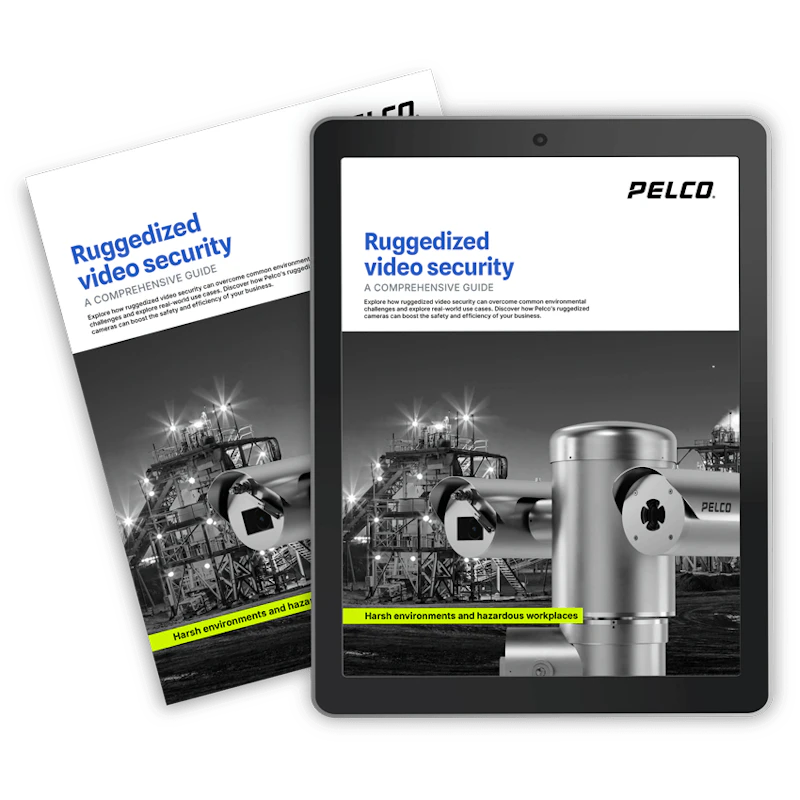
Learn everything you need to know about rugged cameras in our complete guide, including:
- Camera protections, ratings and requirements
- Key insights and considerations for mining
- Choosing a camera system with our checklist
- Rugged technologies and trends to watch
8 security measures for a mine site security plan
Developing an effective mining security plan can be challenging, given the numerous regulatory and physical threat factors. However, advanced technology is helping security planners develop scalable, flexible strategies that adapt to site-specific needs and prepare teams to respond appropriately to incidents.
Below are eight measures to consider for a comprehensive mining security plan.
1. Perform a mine site security audit
Meticulously documenting potential risks, threats and hazards around the entire mine site is the most crucial element of an effective security plan. It will help administrators identify gaps, inventory existing security measures and gather safety feedback from employees.
Document all potential security issues and potential compliance infringements. Working with security consultants can help identify areas for improvement around the site.
2. Evaluate concerns to create a mining security plan
Using the audit documentation, develop a site security plan that addresses all identified issues. Ensure that it covers regulatory compliance, threat mitigation, emergency response protocols and physical security measures that can scale to site security needs.
If there are any concerns about security coverage in your plan, consultants can help ensure your strategy is comprehensive and scales to address evolving risks and threats.
3. Consider sensors to help address security for mines
Smart sensors continue to play a leading role in mine site security. The devices can expand detection capabilities by leveraging Internet of Things (IoT) technology to observe motion, air quality, occupancy and sound.
Devices equipped with these sensors can help security teams enhance risk and threat detection by providing real-time alerts to the appropriate parties when incidents occur.
4. Schedule regular employee safety training
The mine site security landscape is in constant transition, given the evolving threats, risks and hazards across the industry.
Providing staff with regular safety training is a vital component of a security strategy, enabling employees to identify and mitigate security concerns across the site and helping reduce the likelihood of incidents.
5. Assign responsibilities to key personnel
Dedicated personnel responsible for security at mine sites can serve as central figures whose role is to consistently review and improve measures, responses and strategies.
As the security climate can rapidly change in the mining industry, a dedicated team to mitigate risks and threats can help maintain on-site operational efficiency.
6. Implement an access control system
Access control systems can be among the most effective measures for improving mine site security. They are a proactive technology that can help prevent unauthorized access and record site entries and exits.
Advanced access control can feature biometric or hands-free credentials, alongside PIN codes and key cards, to permit authorized entry. The system can effectively manage mining sites with numerous access points, reducing incidents resulting from facility breaches.
7. Install an advanced video security system
Modern video security systems should be more proactive than reactive to mitigate and respond to the increasing number and complexity of mine-site risks and threats. The cameras must provide security teams with comprehensive oversight of a large area, even when resources are limited.
AI security cameras can be an ideal solution for improving threat detection and providing real-time alerts. The technology can process visual data to help identify unusual activity and alert security teams to take appropriate responses.
8. Integrate analytics software for continuous improvement
Implementing video analytics software within the system can be a vital asset for regular improvements in mine site security. Data from all security devices can provide practitioners with deep insight into the current state of site safety, enabling more informed decisions and corrective actions.
How Pelco improves security for mining operations
Like many heavy industries, organizations in the mining sector must consider a proactive transition in their safety approach to address a changing security climate. Reliable security technologies can play a crucial role in achieving a comprehensive security strategy that meets a wide range of needs.
Pelco, a trusted provider of security technologies, offers a range of durable and reliable mining security cameras and smart sensors. It gives mining organizations the proactive capabilities needed to adapt to today’s security landscape.
The following capabilities enable Pelco’s AI-powered security devices to deliver greater mining site safety and security:
- Advanced IP security cameras that enhance situational awareness by providing clear imagery and powerful zoom features, even in low-light conditions
- Purpose-built to withstand harsh environments and weather conditions
- Smart sensors designed to detect safety, security and environmental events, such as loud noises, poor air quality, smoke and more
- AI-powered threat and weapon detection that delivers real-time alerts, helping facilitate faster and more accurate security and emergency response
- Remotely view security feeds from one platform and manage multi-site operations at once
- Seamlessly integrate Pelco’s security devices into existing security systems for enhanced scalability without overhauling the infrastructure
Key takeaways and mine security checklist
The mining industry will continue to face security and operational challenges as organizations expand. As a result, leaders will need to prioritize security to ensure they can continue to maximize productivity and achieve business targets. This can be achieved by:
- Conducting a thorough mine site security audit
- Develop a comprehensive security plan that addresses issues raised in the audit
- Install advanced security systems, including video security, access control and smart sensors
- Leverage analytics software to gain insights for areas of improvement
- Schedule regular employee safety and security training
- Assign safety and security responsibilities to dedicated personnel
Have questions? We can help
Our video security experts can help you implement the right security system for your business.