A complete guide to maritime security and vessel protection


Trusted by 100,000+ organizations across the globe


The maritime industry ranks among the planet’s largest logistics sectors, with significant influence over global trade and economic stability. Subsequently, seafaring security is a primary concern for many marine organizations, as disruptions can have far-reaching impacts on trade.
Despite increased safeguards, maritime security incidents are rising, with over 26,000 reported between 2014 and 2023. The volume and sophistication of attacks on ships, theft and other disruptive events have prompted security leaders to seek adaptive technology to address evolving safety risks and threats.
This guide will explore the importance of maritime and port safety and how to implement a comprehensive strategy to address the changing security landscape.
What is maritime security?
Maritime security is the infrastructure and protocols used to protect ships, ports, coastlines and trade routes from threats, damage and disruption. Security is put in place as the frontline defense mechanism to help ensure the safety of crew, staff and vessels operating at port and sea.
These can include technologies such as maritime surveillance systems and sensors to help identify and detect threats, enabling responsible personnel to take the necessary action. They can also include a series of procedures outlining how to ensure safety at ports and vessels, as well as how to respond appropriately to incidents.
As more naval incidents occurred throughout the 20th century, the International Convention for the Safety of Life at Sea (SOLAS) was introduced to provide guidelines and assistance to maritime leaders responsible for crew and staff. The International Maritime Organization (IMO) has regularly updated and amended the convention in response to incidents and new threats, such as terrorism and modern piracy.
Trade organizations have increased their focus on maritime security as new risks and threats against vessels and ports have emerged, many of which are rapidly evolving in sophistication. Industry leaders continue to seek new methods to help mitigate incidents and protect global trade.

- Trusted globally for over 65 years
- Extreme temperature, weather and heavy-duty options
- Thermal and low-light capabilities for 24/7 visibility
- Corrosion-resistant housings for salt water
Why is maritime security important?
Maritime security is crucial to protecting groups and assets operating in ports or at sea. As the industry’s efficiency significantly impacts global political, economic and social stability, minimizing disruption is a priority for leaders and decision-makers.
Here are some of the main reasons outlining the importance of maritime security:
- Protecting global trade routes from disruption
- Minimizing illegal activities such as drug and human trafficking
- Providing security measures for industry workers, such as crew, passengers and dockworkers
- Safeguarding national borders and territorial waters
- Reinforcing economic stability by minimizing shipping costs and maintaining trade accessibility

Secure maritime grant funding with help from our experts, including:
- Details of the FEMA grant program
- Free counsel from grant experts
- How to submit a strong application
- Best resources & grant finder tools
What are the different types of maritime security issues?
Ensuring maritime security has become increasingly challenging, given the operational risks and threats vessels and ports face. Industry leaders continue to observe global incidents to shape a comprehensive security strategy aimed at mitigating these concerns.
The main types of maritime security issues include:
Terrorism
Terrorism has become an increasing threat in the maritime industry as communication and logistics technologies have advanced. Terrorist organizations either seek to cause economic and political damage and disruptions through attacks on shipping lanes and infrastructure or use them to transport weapons and people.
Piracy
Pirates continue to attack commercial vessels, either holding crews hostage for ransom or stealing high-value goods for onward sale. Today, they are typically better armed, organized and equipped. Industry reports attribute over 7,500 maritime attacks to pirates between 1993 and 2020, highlighting their ongoing threat to merchant ship security.
Thievery
Thievery can be as much an internal threat as an external one in the maritime industry. Workers and crew members at ports and on vessels have been stealing goods for their own use, necessitating increased security vigilance while operating.
Abuse of authority
Incidents involving officers, employees on vessels and port administrators abusing their power have increased in recent years, raising concerns for security on cargo ships. Seafarer exploitation and illegal activities like trafficking are among the abuses of authority.
Vandalism
Trespassers may attempt to break into ports and vessels, causing damage and disruption to businesses. While many vandalism incidents have minimal impact, some incidents can cause significant disruption to operations, such as tampering with sensitive navigation equipment.
Illegal trade and trafficking
Illegal activities such as drugs, arms and human trafficking are among the most common concerns in the maritime industry. Many criminal organizations use ships and naval routes to transport their goods and people to destinations where they could come under significant scrutiny.
Environmental damage
As maritime operations increase due to the demand for goods and services, there is a parallel risk of environmental damage. These incidents can be costly for shippers, including international fines and damage to business assets.
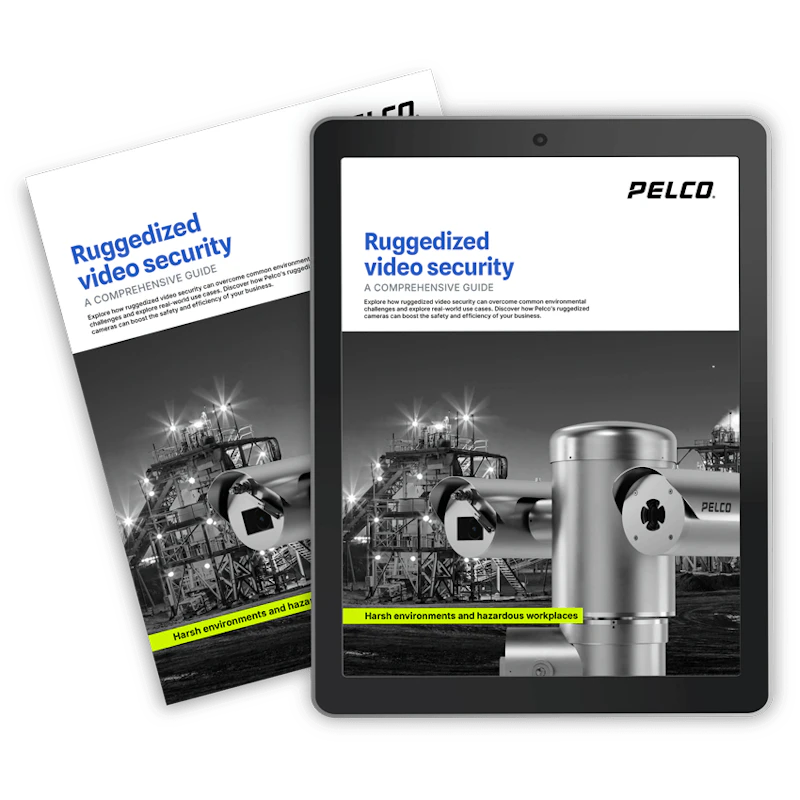
Learn everything you need to know about rugged cameras for your maritime ports in our complete guide, including:
- Key protections, ratings and requirements
- Insights tailored to your environment
- Easy-to-follow camera system checklist
- The latest security technologies and trends
Key components of maritime safety
Given the range of threats, organizations need a security strategy that is scalable, flexible and layered. A combination of technology and training effectively addresses current maritime security needs.
Here are the fundamental components to help shape a layered maritime security:
- Video security cameras: Maintaining visual oversight is a vital component of maritime security. Advanced heavy-duty CCTV cameras can continuously observe vessels and ports, detecting and identifying suspicious or unusual activity.
- Intrusion detection: Internet of Things (IoT) sensors can play a fundamental role in detecting security issues. Motion, sound and air quality sensors can help mitigate risks of trespassing and environmental damage.
- Access control: Most ships, harbors and maritime infrastructure will have sensitive areas intended only for authorized persons. Remotely managed access control can help protect these spaces from intrusion, reducing the risks of internal and external thievery.
- Data analytics: The modern maritime security landscape is characterized by fast-moving, proliferating threats. Analytics platforms with artificial intelligence (AI) assistance can continuously process data and provide deeper insight into port and vessel safety, helping teams shape effective, relevant security strategies.
- Emergency alarms: Maritime infrastructure equipped with emergency alarm systems, such as panic buttons, provides a crucial security layer. These devices enable rapid requests for assistance and fire response, protecting personnel on ships and in harbors.
- Staff and crew training: Regular training for relevant maritime industry operations helps personnel understand current safety and security risks. Educating staff and crew on how to identify and respond to potential incidents can play as much of a role in mitigation as technology.
How to plan and implement security measures in the maritime industry

Implementing a comprehensive security strategy in the modern maritime climate can be challenging. However, a layered solution of security technology, training and routine audits can help adapt to and address evolving industry safety concerns.
Here are nine ways to help plan and implement an effective maritime security strategy:
1. Conduct regular ship security and site inspections
Container ship security officers and harbor administrators will need to regularly inspect areas to ensure that relevant security measures are fitted and functional. Routine audits can help plan, implement and improve safety devices and protocols where necessary, thereby minimizing specific risks and threats in their operating areas.
2. Ensure staff and crew receive appropriate training
While technology can provide comprehensive support for a maritime security strategy, it’s the staff and crew who are ultimately responsible for mitigating and responding to safety incidents. Officers and administrators should ensure that workers receive appropriate security training relevant to their operations to help prevent scenarios that could cause harm, damage or disruption.
3. Report any maintenance issues
Poor vessel maintenance is a leading cause of injury and disruption in the maritime industry, with reported incidents resulting in significant operational delays and regulatory sanctions. Cargo ship security officers should routinely inspect their operation areas and report any issues promptly, helping responsible maintenance teams address them more quickly.
4. Audit security equipment
Security teams responsible for implementing and supporting technology should also regularly audit devices to help ensure optimal functionality. Test the security apparatus to check they are operating as intended, calibrating and performing maintenance where necessary.
5. Review process and procedures for safety and compliance
Safety threats, risks and regulations evolve rapidly in today’s maritime industry, requiring practitioners to continually review vessel and port security processes and procedures, including responses to piracy and equipment failures. Data from security devices can be analyzed in real time to provide continuous insight, helping officers adjust strategies to mitigate current risks and refine procedures.
6. Promote security awareness
Aside from specific training, all employees in the maritime industry should have security awareness, share information among colleagues and promote safety practices across all operations. Security officers should promote a culture of safety by encouraging staff to report unusual activity and potential threats to others.
7. Screen all staff and crew members
Background checks for new staff and crew members are an imperative part of maritime security. Security teams should establish review processes to ensure that individuals are eligible to work on the vessel or in the port and have an acceptable safety record.
8. Continue to support maritime teams and vessel protection
Continuous support for workers is the backbone of a successful maritime security strategy. Listening to and addressing their concerns and queries can help reinforce the safety culture and make it easier to implement or change security protocols.
9. Take advantage of grant programs when available
Lastly, part of your ongoing strategy should also focus on acquiring the necessary funding for security efforts. The Port Infrastructure Development Program (PIDP), for example, is a federal funding opportunity available to owners and operators of U.S. ports to use for security updates and improvements.
Maritime safety and security requirements in different environments
The maritime industry operates in diverse environments, so security requirements can vary depending on circumstances. Security designers will need to analyze and account for the various risks and threats in their environment to develop an effective safety strategy.
Here are the security considerations in the four main environments.
Vessels
Ships are the most commonly associated aspect of the maritime industry, performing the majority of tasks related to organizational operations. As they are enclosed spaces that house many sensitive goods and equipment, the security apparatus must focus on overall cargo ship protection.
Security practitioners will need their strategies to focus on intrusions, theft, protecting personnel from harm and reducing operational disruptions.
Ports
Ports and harbors host highly active operations, such as the loading of goods and the storage of containers in warehouses. Maritime port security teams will need to address potential trespassing, theft, improper use of personal protective equipment (PPE) by workers and correct conduct while operating heavy machinery.
Offshore sites
Offshore sites in the maritime industry refer to structures and operations used to explore and extract natural resources, such as oil and gas. Many of these ventures are conducted outside territorial waters, posing unique security challenges.
Vessels and structures offshore require standard maritime security protocols, but may also be more vulnerable to terrorist attack because they are outside a security jurisdiction. Planners must prepare for these potential scenarios, incorporating advanced detection methods into their strategy.
Maritime infrastructure
Infrastructure used in maritime operations is also vulnerable to safety and security risks, where its compromise could cause significant disruption. Structures and machines such as cranes, wharves, dams and channels can be vandalized or attacked. Security teams must implement strategies to maintain their integrity.
Enhancing marine safety and security through technology
The importance of the maritime industry to global stability means that there will constantly be evolving security threats and risks. Security practitioners within the sector need to remain consistently vigilant to minimize damage and disruption to operations, which can be challenging amid the growing number of potential incidents.
Advanced maritime security technology can be adaptable to help address and mitigate the ever-changing safety landscape. Paired with staff training and promotion of situational awareness, naval organizations can remain prepared and ready to respond to potential scenarios.
Have questions? We can help
Our video security experts can help you implement the right security system for your business.